Why Does My 4-Year-Old Hate Coloring?
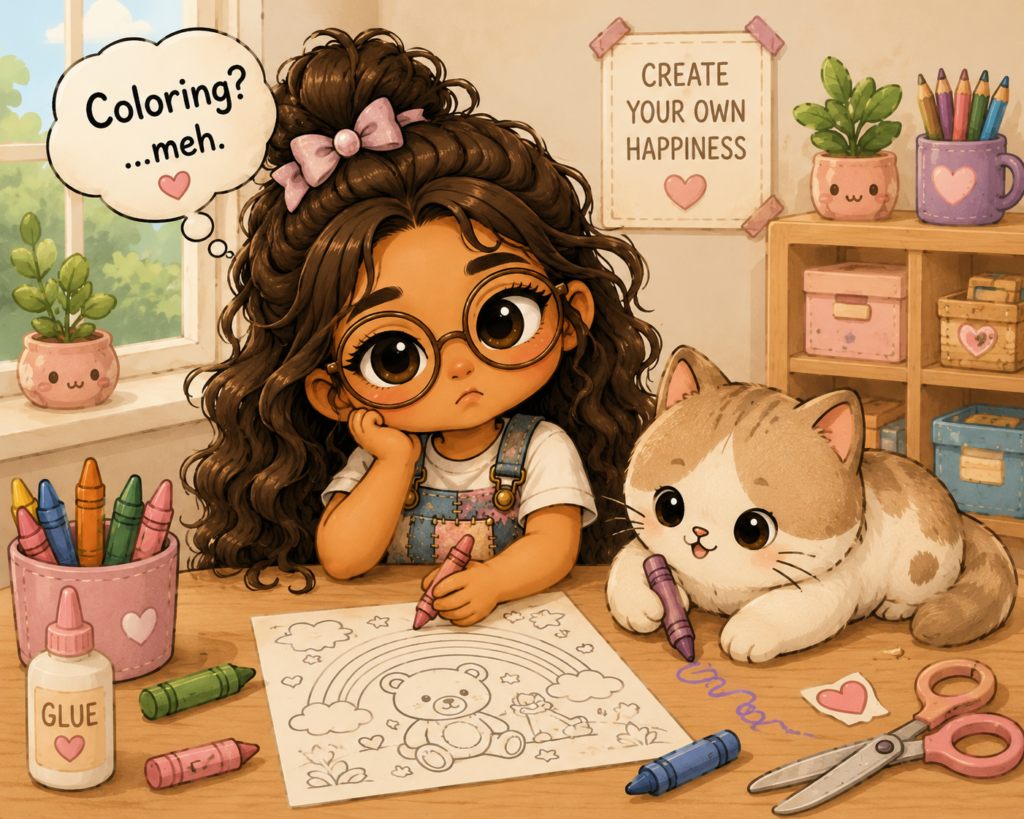
You pull out the crayons and a cute coloring page, expecting a few peaceful minutes of coloring.
Your 4-year-old makes three scribbles, announces that they’re finished, and disappears.
Or maybe they refuse to color altogether.
Meanwhile, another child the same age will happily sit at the table filling an entire page with carefully chosen colors.
If your 4-year-old doesn’t like coloring, you might wonder whether they’re supposed to enjoy it by now or whether their lack of interest means they’re falling behind.
The short answer is: not necessarily.
Four-year-olds can have very different interests, attention spans and developing skills. Coloring combines several abilities at once, and some children simply don’t find the activity enjoyable.
Before trying to convince your child to color more, it can help to figure out what they dislike about it.
1. Coloring May Feel Too Difficult
What looks like a simple activity to an adult actually requires quite a lot from little hands.
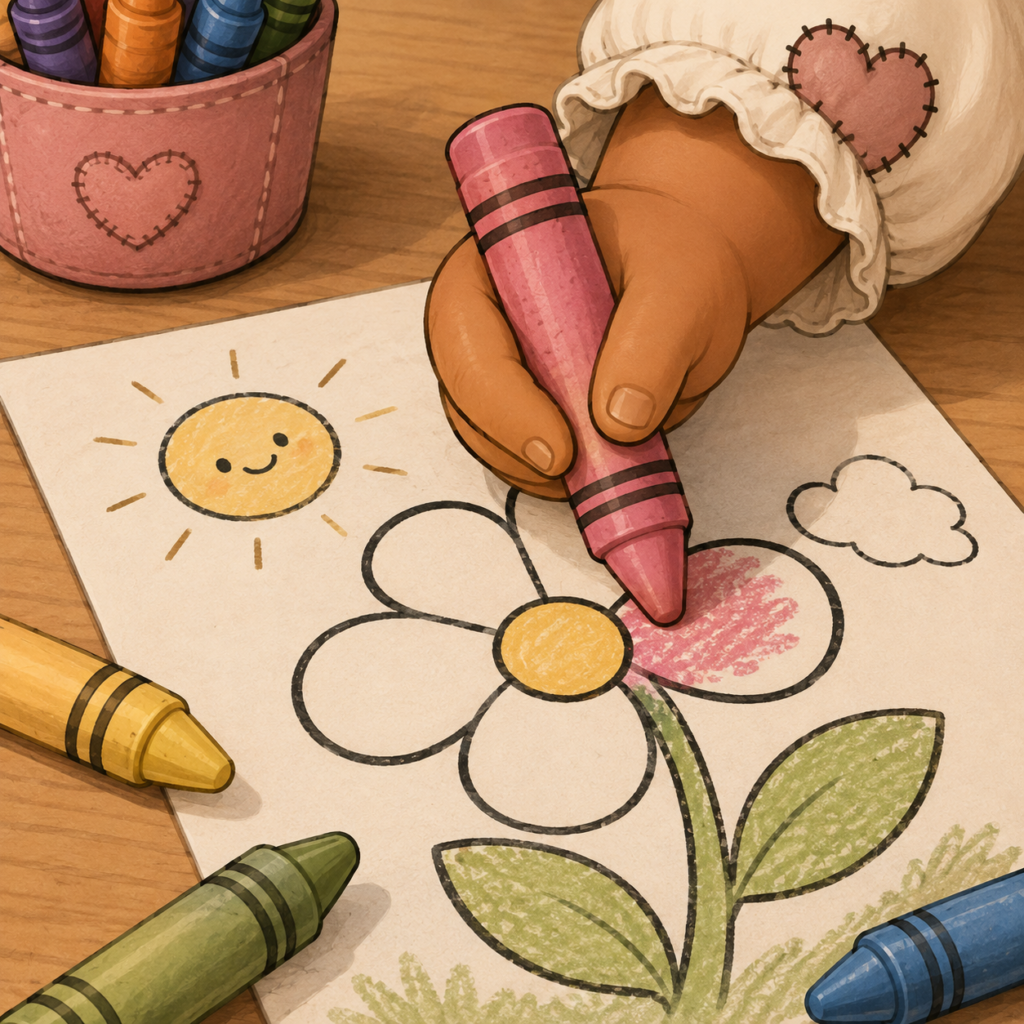
A child has to hold the crayon, control its movement, apply enough pressure to make a mark and guide it toward the area they want to color.
Trying to stay inside small spaces adds another challenge.
If those skills are still developing, coloring can feel more like work than play.
Imagine being handed a tool that’s awkward to control and then being told to use it precisely. You probably wouldn’t choose that activity for fun either.
What you can try
Make the physical part of coloring easier.
Try:
- Chunky crayons
- Short crayons
- Large pictures
- Thick, simple outlines
- Big open spaces to color
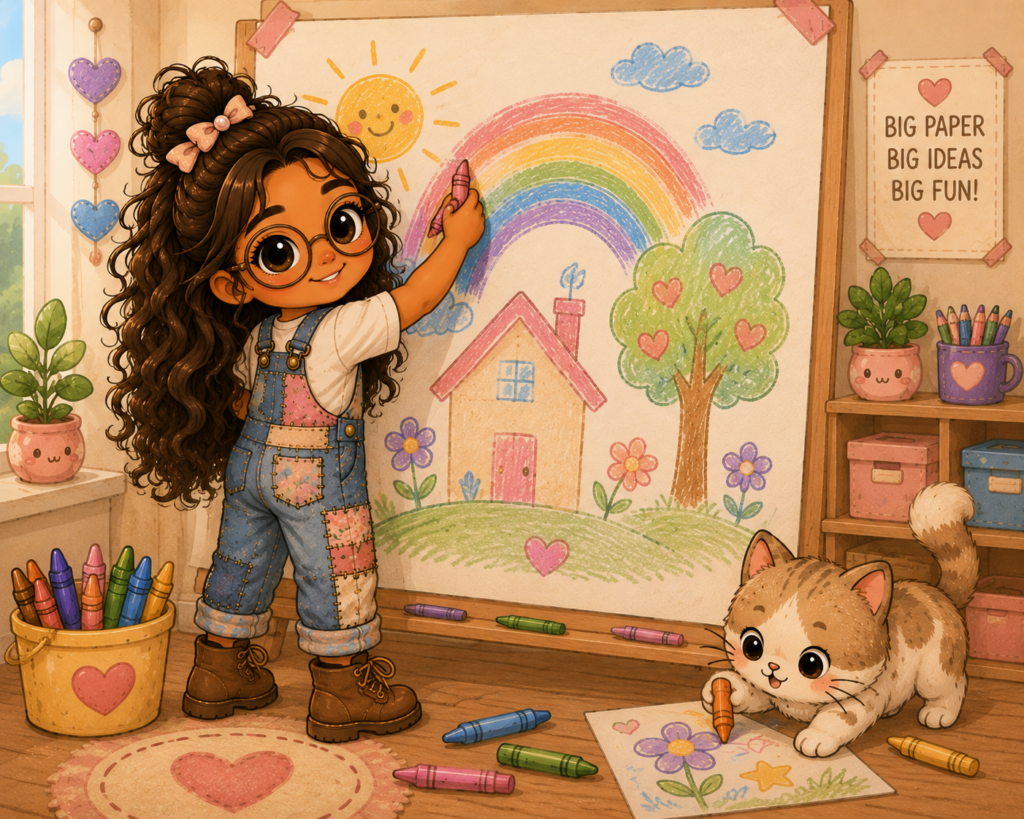
- Large sheets of paper
- Washable markers
- Crayon rocks or other easy-to-grasp drawing tools
Forget about staying inside the lines for now.
Let your child experience the fun of making marks and choosing colors without worrying about precision.
2. They Might Not Like Coloring Inside the Lines
Sometimes the problem isn’t coloring.
It’s coloring pages.
Your child may happily draw enormous circles, scribble across paper or cover a cardboard box in marker but lose interest the moment they’re given a picture they’re expected to fill in.
That’s useful information.
Some children prefer creating something from nothing rather than completing a picture somebody else created.
Give them blank paper and see what happens.
You can also try activities that sit somewhere between drawing and coloring. Draw a giant monster and let your child add the face. Make an enormous flower together. Draw roads and let them add houses, trees and cars.
The goal doesn’t have to be completing a perfect picture.
The goal can simply be enjoying making things.
3. They May Be Worried About Doing It “Wrong”
By four, some children are already very aware of whether their picture looks the way they think it should.
A child might say:
“I can’t do it.”
“Mine looks bad.”
“You do it.”
“I don’t know how.”
Sometimes refusing to color is easier than trying and feeling disappointed.
If that’s happening, try removing the idea that there is a correct result.
A purple dog is fine.
The sky can be orange.
Scribbling across three sections at once is fine.
Instead of saying, “Try to stay inside the lines,” talk about their choices.
“You chose so many colors!”
“That’s a huge blue section.”
“You made really strong lines there.”
This shifts attention away from producing a “good” picture and back toward experimenting.
4. The Picture Might Be Too Complicated
A detailed coloring page that looks adorable to an adult can look exhausting to a preschooler.
Tiny flowers.
Little buttons.
Small sections.
Intricate backgrounds.
Lots of separate objects.
Your child may look at the whole page and decide that the easiest solution is not to start.
For younger children, simple can be much more inviting.
Try one large dinosaur instead of an entire prehistoric scene.
One giant cupcake instead of a bakery.
One smiling frog instead of a pond filled with plants, bugs and tiny details.
A page they can finish relatively quickly can also give them a sense of accomplishment.
5. They May Not Want to Sit Still
Your child may simply prefer activities that involve their whole body.
Running.
Building.
Climbing.
Pretend play.
Dancing.
Digging.
Moving toys around the floor.
Then somebody hands them a crayon and expects them to sit at a table for twenty minutes.
It’s not difficult to see why coloring loses.
Instead of expecting a long coloring session, try putting the supplies out for a few minutes and allowing your child to leave when they’re finished.
You could also change where they create.
Tape a large piece of paper to a wall or easel so they can draw standing up.
Take sidewalk chalk outside.
Spread a huge sheet of paper across the floor.
Color a cardboard box.
Art doesn’t always have to happen while sitting neatly at a table.
6. They Could Be Bored With the Materials
Sometimes changing the tool changes the entire activity.
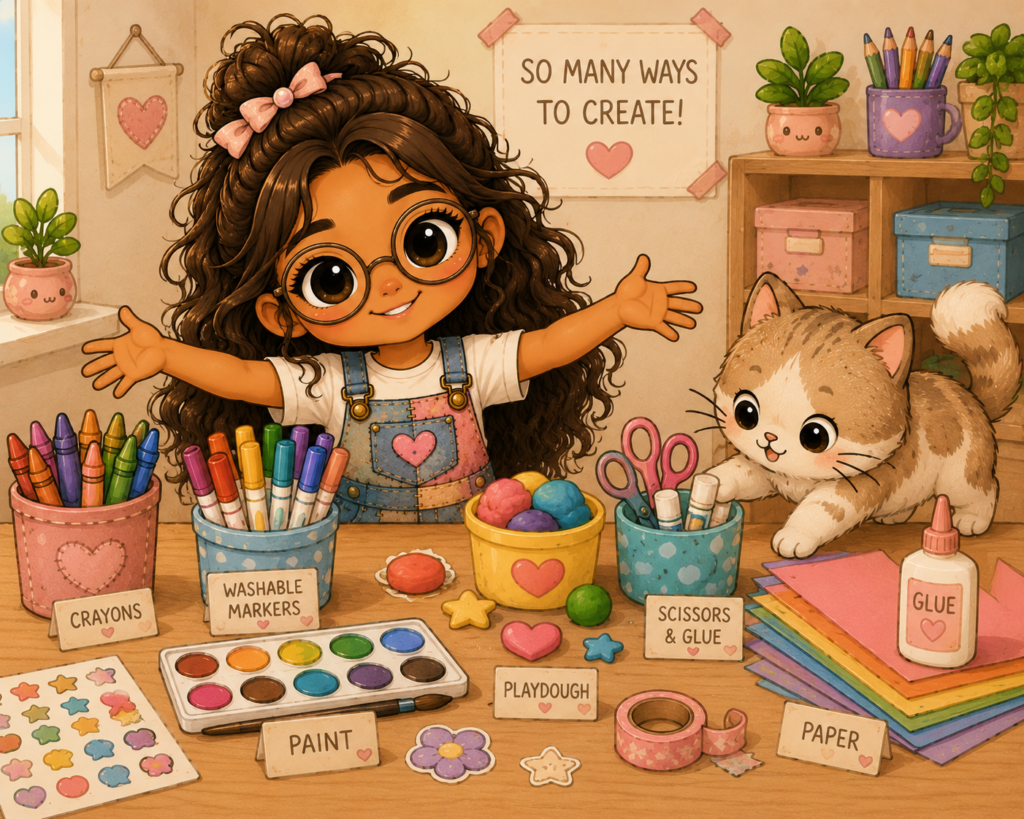
A child who ignores crayons might be fascinated by:
- Washable markers
- Chalk
- Dot markers
- Paint sticks
- Colored pencils
- Watercolors
- Finger paints
- Stickers
- Stamps
You don’t need to continually buy new art supplies.
Even simply putting away the crayons for a while and bringing them back later can make them feel new again.
7. They’re Just Not Interested in the Picture
Adults sometimes choose coloring pages based on what we think children will find cute.
Your four-year-old may have other ideas.
A beautiful woodland scene isn’t going to compete very well if your child currently thinks garbage trucks are the greatest invention in human history.
Follow their interests.
If they’re fascinated by dinosaurs, find dinosaurs.
If it’s bugs, try bugs.
If it’s princesses, vehicles, sharks, food, robots, cats or outer space, start there.
Interest can be a surprisingly powerful motivator.
You can even let your child choose between two or three pictures rather than choosing for them.
8. Your Child May Simply Not Like Coloring
And that’s okay.
Coloring is only one creative activity.
A child can build fine motor skills, practice coordination and express creativity in many other ways.
Try:
- Playdough
- Building blocks
- Cutting and pasting
- Stickers
- Beads
- Puzzles
- Painting
- Drawing
- Paper crafts
- Threading activities
- Building with cardboard
- Tearing and gluing paper
- Water painting
- Sensory play
Your child doesn’t have to become someone who loves coloring.
Should a 4-Year-Old Be Able to Color Inside the Lines?
This is where it’s helpful to separate developing a skill from expecting perfection.
Preschoolers are still developing the hand control required for precise coloring. You may notice your child’s movements gradually becoming more controlled, but there is no reason every picture needs to be perfectly filled.
Instead of judging the finished page, watch how their skills change over time.
Are their marks becoming more deliberate?
Can they make different kinds of lines?
Are they beginning to control where the crayon goes?
Can they use drawing and art materials more easily than they could several months ago?
Those changes can tell you much more than whether a little bit of blue crossed the outline of a dinosaur.
How Long Should a 4-Year-Old Sit and Color?
There isn’t a magic number.
One child might happily color for twenty minutes. Another might be finished after three.
Rather than setting a timer and expecting your child to continue until it rings, consider letting interest determine the length of the activity.
A five-minute coloring session that your child genuinely enjoys is more valuable than twenty minutes spent arguing about finishing the page.
You can always leave the picture somewhere accessible.
They might return to it later.
How Can I Get My 4-Year-Old Interested in Coloring?
Start by making coloring optional and easy.
Put a small selection of crayons or markers somewhere accessible. Offer a simple picture or blank paper.
Then let your child decide what happens.
You can sit beside them and color your own picture without turning the activity into a lesson.
Sometimes seeing an adult enjoying an activity is enough to spark curiosity.
You could also experiment with:
- Coloring together
- Letting your child choose the picture
- Using unusually large paper
- Trying different art supplies
- Coloring outdoors
- Drawing silly pictures for each other
- Adding stickers after coloring
- Turning finished pictures into simple crafts
- Coloring only part of a picture
- Letting your child stop whenever they want
Most importantly, try not to make loving coloring the goal.
What If My Child Never Wants to Color?
If coloring is the only activity your child avoids but they’re happily using their hands for building, playing, drawing, manipulating toys and other everyday activities, they may simply have different preferences.
If you’re concerned about your child’s broader development or notice persistent difficulty with everyday tasks involving their hands, coordination or movement, bring those observations to your child’s pediatrician or another qualified healthcare professional.
You don’t need to diagnose the reason yourself.
Coloring Is an Invitation, Not an Assignment
It’s easy to compare preschoolers.
One child colors carefully.
Another scribbles.
Another draws elaborate creatures.
Another would rather build a tower and knock it down seventeen times.
Childhood creativity doesn’t have to look the same for everyone.
Keep the crayons available. Keep offering opportunities to draw, paint, build, cut, paste and create.
Your child might suddenly become fascinated with coloring six months from now.
Or they might always prefer creating in other ways.
Either way, there are plenty of ways for little hands and big imaginations to stay busy.