Is Coloring Good for Children? 7 Benefits of Coloring and Why It Matters
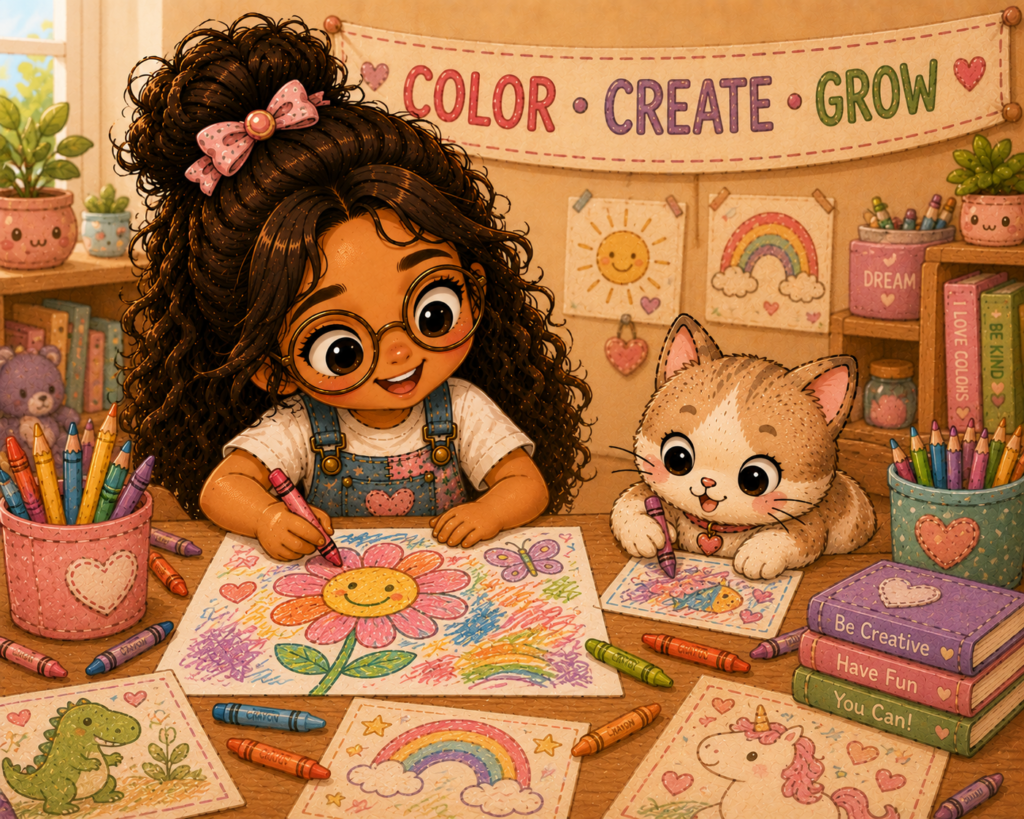
A box of crayons and a coloring page can look like one of the simplest children’s activities imaginable.
Pick a color.
Make some marks.
Try to fill the picture.
Done.
But while your child is busy deciding whether a dinosaur should be green, purple or covered from head to toe in pink scribbles, quite a lot can be happening behind the scenes.
Coloring gives children opportunities to use their hands, coordinate their movements, make choices, experiment with color and create something of their own.
And perhaps most importantly?
It can simply be fun.
So, is coloring actually good for children?
It certainly can be.
Here are some of the ways coloring can support children’s developing skills—and why you don’t need to turn it into a lesson for it to be worthwhile.
1. Coloring Gives Little Hands Plenty of Practice
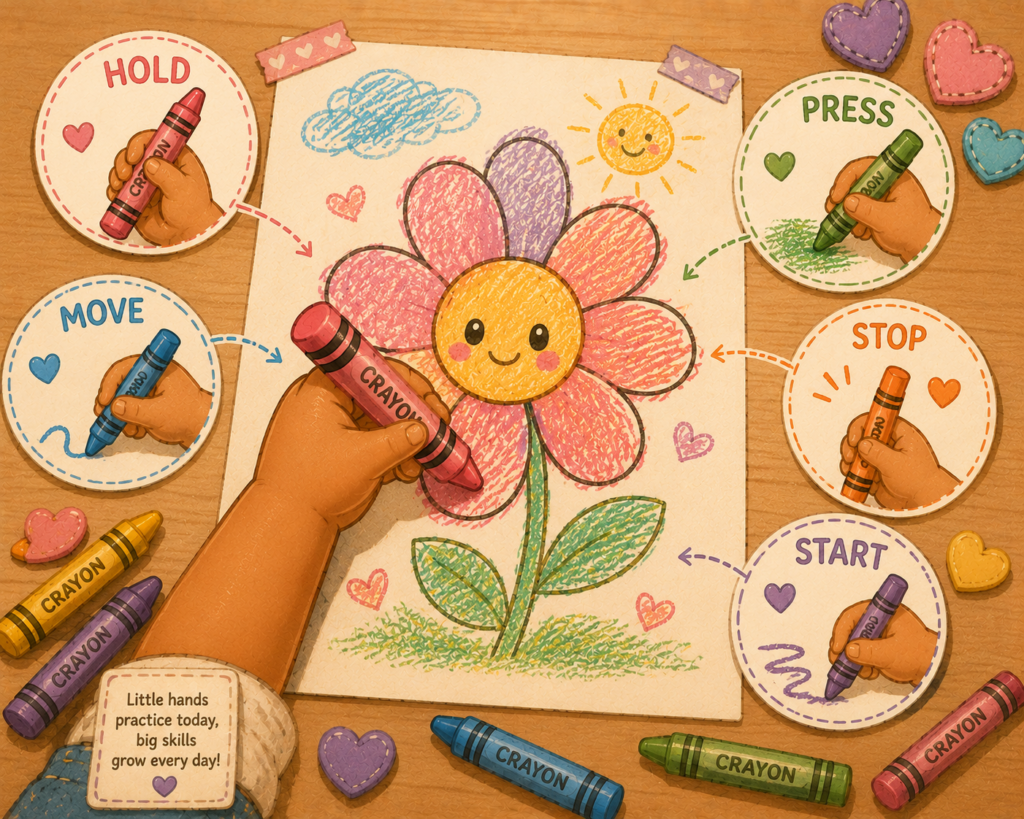
Think about what your child’s hand is doing while holding a crayon.
Their fingers have to hold the tool.
Their hand moves it across the page.
They change direction.
They press harder or softer.
They stop.
Start again.
Move toward another part of the picture.
All of those little movements give children opportunities to practice controlling their hands and fingers.
You don’t need to correct their grip every thirty seconds or insist that they color perfectly.
Simply using crayons, pencils and other drawing tools gives those little hands experience.
2. Coloring Can Help Develop Hand-Eye Coordination
Your child’s eyes see where they want the crayon to go.
Their hand then has to try to make it happen.
That sounds simple until you remember that young children are still learning to coordinate those movements.
A child may decide:
“I want this flower to be pink.”
Now they have to move the crayon toward the flower, place it on the paper and control their movement within that general area.
Early attempts may go everywhere.
That’s part of the process.
With experience, movements can gradually become more controlled and intentional.
3. Coloring Gives Children Opportunities to Practice Pencil Control
Before children are expected to form letters and numbers, they spend years learning how to control tools with their hands.
Coloring can be one of many activities that gives them that experience.
While coloring, children practice movements such as:
- Moving a tool across paper
- Changing direction
- Starting and stopping
- Making short and long strokes
- Controlling pressure
- Filling larger and smaller spaces
These experiences aren’t the same thing as handwriting instruction, but they give children opportunities to become increasingly comfortable manipulating drawing and writing tools.
4. Coloring Encourages Decision-Making
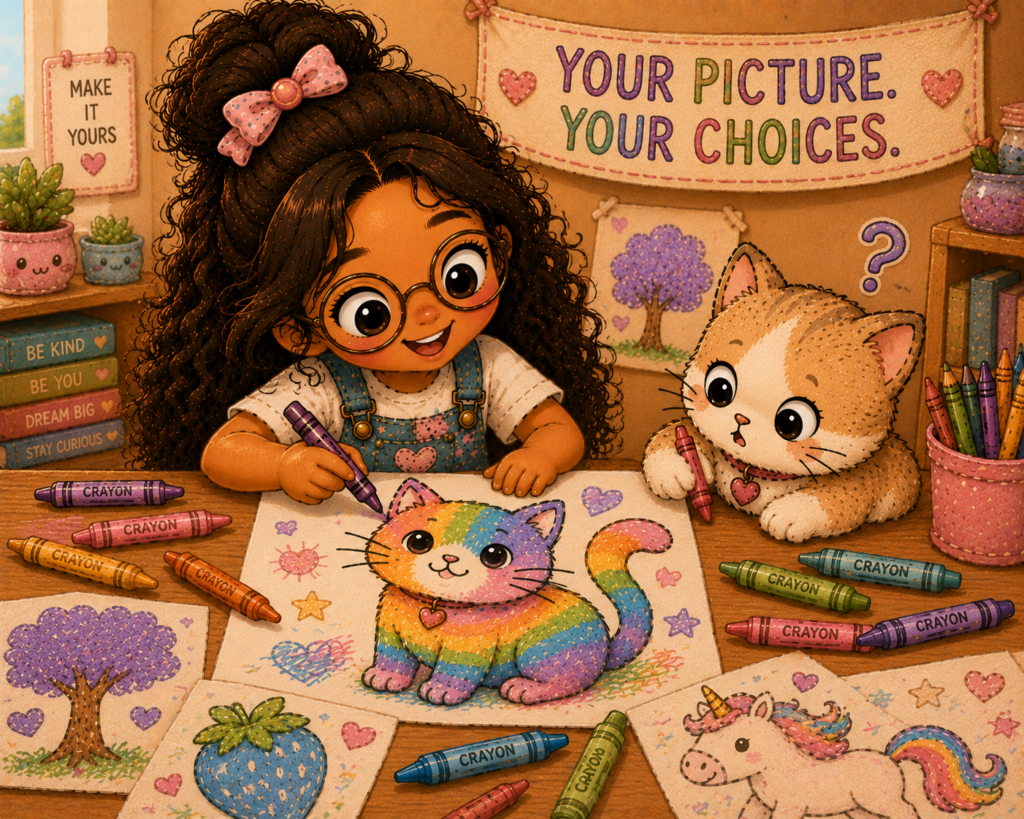
Give two children the exact same picture and they may produce completely different results.
Why?
Because coloring involves choices.
Which color should I use?
Where should I start?
Should the cat be brown or blue?
Do I want the background colored?
Should I use one color or six?
Do I want to finish the whole thing?
These decisions may seem tiny to adults, but children are still making choices and seeing the results of those choices.
And sometimes their choices are wonderfully unexpected.
Purple grass?
Absolutely.
Rainbow elephant?
Why not?
Blue strawberries?
Go for it.
Not every creative activity needs a correct answer.
5. Coloring Can Encourage Creativity
There’s sometimes an assumption that coloring pages aren’t creative because the picture has already been drawn.
But creativity doesn’t disappear simply because an outline exists.
Children still decide how they want that picture to look.
They can experiment with colors, patterns and combinations.
They can add things.
They can draw a background.
They can turn the picture into something completely different.
A plain cat can suddenly have rainbow stripes, a superhero cape and a house on the moon.
You can encourage this by avoiding unnecessary rules.
A tree doesn’t have to be green.
The sun doesn’t have to be yellow.
Let children experiment.
6. Coloring Can Be a Quiet, Focused Activity
Some children can become completely absorbed in coloring.
The room goes quiet.
They choose their colors.
They work on one little section.
Then another.
For those children, coloring can provide an enjoyable period of focused, relatively calm activity.
That can make it useful during moments when you need something quieter to do.
Perhaps:
- After a busy day
- During quiet time
- While waiting for dinner
- On a rainy afternoon
- While traveling
- At a restaurant
- During a sibling’s activity
- Before moving on to another part of the day
But it’s important to remember that children are different.
One child may happily color for thirty minutes.
Another may make four marks and announce:
“DONE!”
Coloring doesn’t have to be calming for every child.
7. Coloring Can Give Children a Sense of Accomplishment
There’s something special about holding up something you’ve made and saying:
“Look!”
A finished coloring page is something a child can see, hold, display or give to somebody.
That can create a simple sense of accomplishment.
They started with an uncolored picture.
They made choices.
They worked on it.
And now it’s theirs.
Try to focus your praise on their effort and choices rather than whether the picture is “good.”
Instead of:
“That’s perfect!”
You might say:
“You worked really hard on that.”
“I love all the colors you chose.”
“You added so many little details.”
“Tell me about your picture.”
This gives your child room to be the creator rather than waiting for an adult to judge the result.
Does Coloring Help With Fine Motor Skills?
Coloring is one activity that gives children opportunities to use the small muscles of their hands and fingers.
But it isn’t the only one.
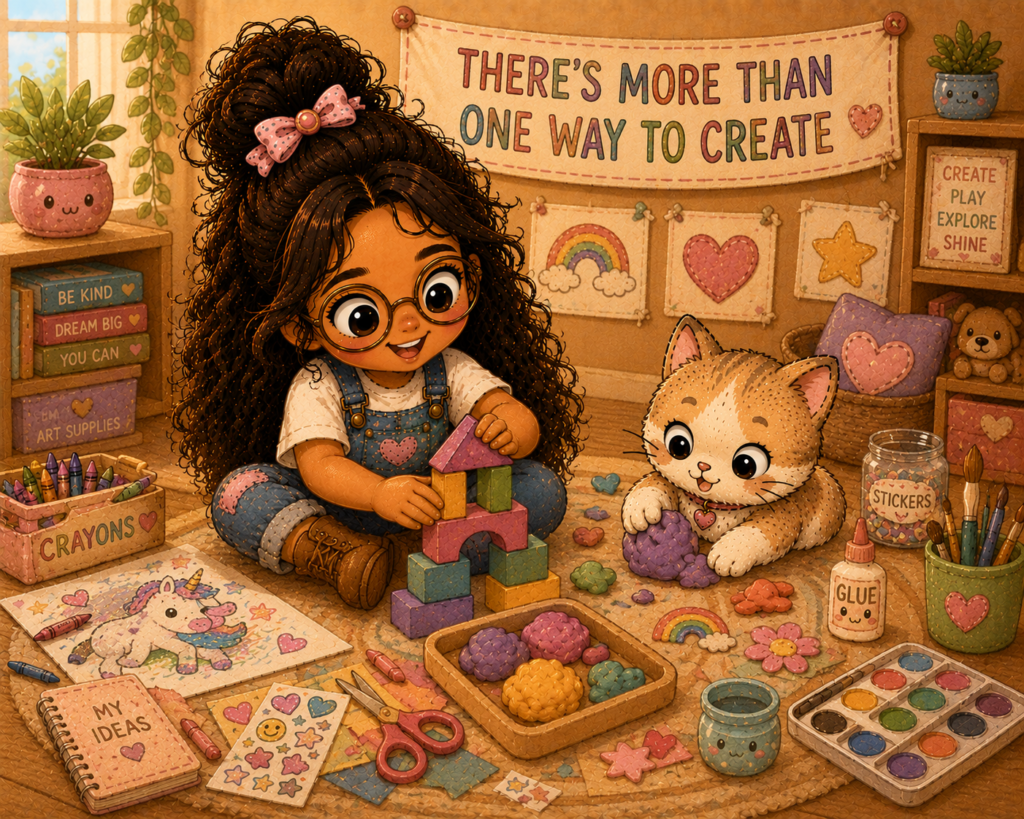
Children can also use their hands through:
- Playdough
- Building blocks
- Puzzles
- Threading
- Stickers
- Cutting and pasting
- Painting
- Drawing
- Construction toys
- Crafting
- Tearing paper
- Manipulating small toys
That’s important because some children simply don’t enjoy coloring.
They can still have plenty of opportunities to use their hands in other ways.
Does Coloring Help Children Learn to Write?
Coloring and handwriting aren’t the same activity.
However, coloring gives children experience holding and controlling tools that are also used for drawing and, eventually, writing.
Think of it as part of a much bigger collection of experiences.
Drawing.
Scribbling.
Painting.
Coloring.
Tracing.
Building.
Cutting.
Playing.
All can give children different opportunities to develop skills they’ll use later.
There’s no need to turn every coloring session into handwriting preparation.
Sometimes a picture of a frog really can just be a picture of a frog.
Is Coloring Inside the Lines Important?
Not nearly as important as adults sometimes make it seem.
Young children are still developing control.
Their crayon will cross the line.
Probably many times.
That’s not a ruined picture.
It’s a child learning how their hand movements affect the marks appearing on the page.
Over time, you may notice that their coloring becomes more deliberate.
They might begin filling particular areas.
Their strokes may become smaller.
They may start attempting to stay within boundaries.
Those changes can happen gradually.
You don’t need to continually remind a young child:
“Stay inside the lines!”
Let them color.
What About Scribbling?
Scribbling counts too.
To an adult, a page covered in random loops and lines might look like nothing.
To a young child, it may represent experimentation.
They’re discovering:
If I move my hand like this, I get this mark.
If I push harder, the mark becomes darker.
If I use another color, the picture changes.
If I move really fast…
LOOK WHAT HAPPENS!
Those experiments are part of learning to use art materials.
Are Coloring Books Better Than Blank Paper?
They don’t need to compete.
Give children access to both.
Coloring pages provide an existing picture that children can decorate.
Blank paper lets them decide what exists on the page in the first place.
Both can offer different creative experiences.
One afternoon your child might want to color a giant dinosaur.
The next day they might want blank paper so they can draw an enormous purple blob that is apparently a spaceship carrying seventeen cats.
There’s room for both.
What If My Child Doesn’t Like Coloring?
Don’t force it.
Some children adore coloring.
Some tolerate it.
Some would much rather paint, build, cut, glue, draw, sculpt, dig, climb or invent elaborate worlds with cardboard boxes.
Coloring is one activity, not a requirement for childhood.
You can occasionally offer it without turning it into a battle.
Try different materials.
Try larger pictures.
Let them color on big paper.
Follow their interests.
Color beside them.
Or put the crayons away and do something else.
A child doesn’t have to love coloring to be creative.
How Can I Make Coloring More Fun?
Take some of the rules away.
Let your child choose the picture.
Let them choose the colors.
Try chunky crayons, markers, pencils or chalk.
Color together.
Use enormous sheets of paper.
Draw silly additions to coloring pages.
Add stickers.
Turn completed pictures into crafts.
Color outdoors.
Let children stop when they’ve had enough.
And don’t worry if the finished picture looks nothing like you expected.
Sometimes that’s the best part.
So, Is Coloring Good for Children?
Yes—coloring can be a wonderfully simple activity that gives children opportunities to practice hand control, coordination, decision-making, creativity and concentration.
But it doesn’t need to become another thing parents feel pressured to make their children do.
Put out the crayons.
Offer the paper.
Make creating accessible.
Then give your child room to decide what happens next.
Maybe they’ll carefully color every tiny part of the picture.
Maybe they’ll create a rainbow cat.
Maybe they’ll scribble across the whole page in thirty seconds.
Maybe they’ll abandon the crayons and build something instead.
Childhood creativity has plenty of room for all of it.